
 Honey bees are near extinct from the ecosystem due to human errors. In most cases
bees and their natural nests are burnt up by bushfires lighted by hunters and
farmers or the bees are forced to flee to far off bushes. To reverse issues and
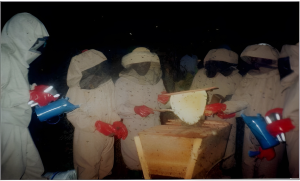
domesticate the bees, we are training farmers to produce and install an initial bee
hives so as to rekindle the beekeeping culture in their communities. Given that there
is an interlinked relationship between honeybees,forests and man, food security,
health care and ecosystem resilience are strongly rooted in the maintenance of
biodiversity. As we grow woody perennials and food crops on farms, we take
advantage to integrate honey bees into the agroforestry systems so as to enable
local people engage in the stewardship of landscapes and associated bio-cultural
diversity.Honey bees play a major role in sustaining forests, forest-dependent livelihoods and
the environment as they pollinate flowering plants leading to increased crop yields.
Apart from honey as the main product associated with bees, apiculture generates
much more than just honey: the maintenance of biodiversity and pollination of crops
are perhaps the most valuable services provided by bees. Other honey bee products
are beeswax, pollen and propolis, royal jelly and venom, and the use of bees in
apitherapy (a form of medicine using bee products).
